Ballet Shoe Bow Flower Cake Spotlight Review
As a designer who spends more time staring at stitch maps than most people care to admit, I approach new design assets with a healthy dose of skepticism. We have all been there: you download a file that looks crisp on the screen, only to find it turns into a bird's nest of thread breaks and puckering once it hits the machine. That is why I was particularly interested in putting the Ballet Shoe Bow Flower Cake Spotlight collection through its paces. This isn't just a quick glance at some cute icons; this is a deep dive into how these Illustrations and Graphics hold up when translated into actual thread on real fabric.
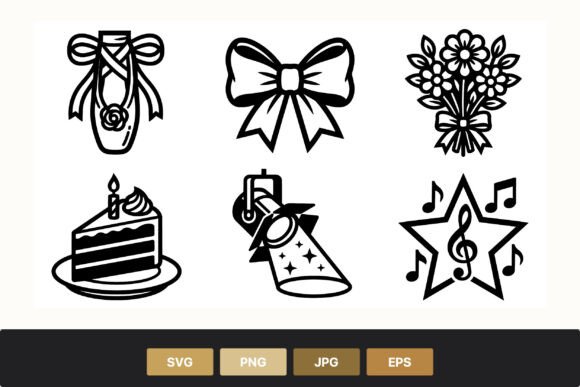
The first thing that strikes me about this set is its versatility. We are looking at a curated mix of black and white line art that includes a ballet shoe with delicate lace, a decorative bow, a bouquet of flowers, a slice of cake with a candle, a theatrical spotlight with sparkles, and a star adorned with musical notes. Visually, the mood is whimsical yet structured. It feels like a celebration of performance, milestones, and creativity. For an Etsy seller or a boutique owner, this thematic cohesion is gold. You aren't just buying random clipart; you are buying a narrative that can be stitched onto a handmade product to tell a specific story.
Real-World Application: The Recital Gift Rush
To truly test the viability of the Ballet Shoe Bow Flower Cake Spotlight pack, I imagined a very common scenario for many of us: the end-of-season recital rush. A client comes in needing custom gifts for a dance troupe. They want something elegant but fun for the dancers, and perhaps something slightly different for the parents or teachers. This is where this machine embroidery design set shines.
I started by digitizing a mock-up for a tote bag design. The ballet shoe icon, with its implied lace detail, needed to be clean. In my mental simulation of the stitching process, I looked for potential trouble spots. Line art can be tricky; if the running stitch or satin stitch definitions aren't clear in the source file, the machine might over-compensate. However, the simplicity of the black and white aesthetic suggests a design that relies on clarity rather than density. If executed with a standard fill stitch for the shoe body and finer stitches for the lace, this would look incredibly professional on a canvas tote.
Next, I considered the cake and spotlight icons for a sweatshirt embroidery project. Sweatshirts are notorious for being thick and sometimes fuzzy. A design with too much stitch density will cause the fabric to pucker or the threads to break. The "spotlight with sparkles" element caught my eye here. Sparkles in embroidery usually mean small, isolated satin stitches or perhaps metallic thread. If this design is intended for a custom apparel item like a hoodie, the user needs to be careful. Those tiny sparkle details might get lost in the fleece texture unless the digitizer has accounted for pull compensation. For a smoother fabric like a jersey t-shirt, however, these details would pop beautifully, adding that touch of theatrical flair.
Navigating Fabric Textures and Hoop Limitations
One of the most critical aspects of using any digital embroidery file is understanding where it fails. No design is perfect for every surface. With the Ballet Shoe Bow Flower Cake Spotlight collection, I see some areas where caution is required. Let's talk about the bouquet of flowers and the musical star. These elements likely contain fine lines and potentially tight corners.
If you are planning to use these on an embroidered patch, you need to pay close attention to the border definition. Patches often require a merrowed edge or a tight satin border. If the internal details of the flowers are too close to the edge, the needle might punch through the border during the finishing process. Similarly, if you are aiming for baby embroidery on a onesie, the fabric is thin and stretchy. You absolutely must use a high-quality cut-away stabilizer. The decorative bow, while charming, could easily distort the knit fabric if the stitch count is too high or if the stabilizer isn't robust enough to handle the tension.
Curved surfaces present another challenge. Putting the cake slice or the spotlight on a cap is a popular request for craft business owners. Caps are difficult because of the seam and the curvature. Small, detailed icons work best on the front panel of a cap, but you must ensure the hoop size you have available matches the design dimensions. If the original files are large, you might need to resize them. Be warned: resizing embroidery files can distort stitch angles and densities. Always check if the provider offers multiple sizes or if the design is scalable without losing integrity.
Visual Appeal and Brand Consistency
Beyond the technical stitching, let's discuss the value these Graphics bring to your brand. In the world of commercial embroidery, consistency is key. If you are building a small shop product line around performing arts or celebrations, having a matching set of icons allows you to create a cohesive catalog. A customer might buy a pillow cover with the spotlight for their living room and a tea towel with the cake for their kitchen. The visual language remains consistent, which builds customer trust and recognition.
The black and white nature of these Illustrations is a double-edged sword that actually works in your favor. It gives you, the maker, complete control over the thread colors. Want a pastel ballet shoe for a spring collection? Go ahead. Need a bold, neon spotlight for a summer festival merch drop? You can do that too. This flexibility increases the finished product value because you can tailor the item to current trends without needing a new design file. It also makes creating printable mockups for your online store much easier, as the high-contrast line art translates well to digital previews.
Practical Notes for the Working Designer
Before you commit to stitching the Ballet Shoe Bow Flower Cake Spotlight on a client's expensive garment, here is my professional advice based on years of trial and error:
- Test on Scrap First: Never skip the test run. Stitch the design on a scrap piece of the exact fabric you intend to use. This reveals issues with fabric texture and tension that you cannot see on a screen.
- Check Thread Contrast: Since these are line art concepts, they rely heavily on contrast. Ensure your chosen thread colors stand out against the garment. Dark thread on dark fabric might look sophisticated in theory but invisible in reality.
- Review Stitch Density: Look closely at the flower bouquet and the lace on the shoe. If the stitches are too packed together, it can cause the thread to bunch up. If they are too sparse, the fabric might show through unattractively.
- Confirm Hoop Size: Verify the dimensions of the design against your machine's capabilities. Don't assume a design fits a 4x4 hoop just because it looks small.
- Inspect Small Details: Zoom in on the candle flame and the musical notes. Are the connections between stitches logical? Will the needle travel smoothly, or will there be excessive trimming?
- Stabilizer Matters: Match your stabilizer to the fabric. Water-soluble might work for towels, but for a holiday embroidery gift on a heavy coat, you likely need something heavier.
- Licensing Check: Finally, and most importantly, confirm the licensing terms. Can you sell the finished product? Can you sell the digital embroidery file itself? Most designers allow selling the physical item but restrict reselling the file. Always read the fine print to protect your craft business.
In conclusion, the Ballet Shoe Bow Flower Cake Spotlight set offers a charming and versatile foundation for a wide range of projects. From personalized gifts for dancers to boutique branding elements, the potential is significant. However, like any tool, its success depends on the skill of the operator. By respecting the limitations of the fabric, choosing the right stabilizer, and testing thoroughly, you can transform these simple line art icons into stunning, tangible works of art that your customers will cherish. It is a solid addition to any designer's library, provided you approach it with the practical eye of a professional who knows that the magic happens not in the download, but in the stitch.