Cute House Line Art Icons: A Designer's Review
As someone who spends most of their day staring at digitized files and analyzing how they translate from screen to thread, I approach new Illustrations with a critical eye. It is not enough for a design to look cute on a monitor; it must survive the tension of the hoop and the texture of the fabric. Recently, I evaluated the Cute House Line Art Icons set to see if these six black and white vector-style houses could hold up in a real-world embroidery project. My goal was to determine if this collection offers genuine value for Etsy sellers, boutique owners, and hobbyists looking to create high-quality handmade products.
First Impressions and Visual Personality
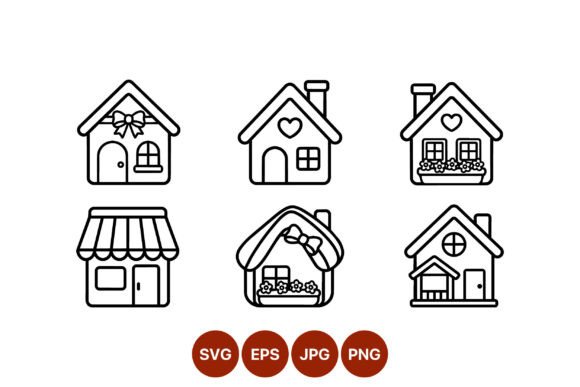
Upon opening the ZIP folder, the first thing that strikes me about the Cute House Line Art Icons is their charming simplicity. The set features six distinct house shapes, each adorned with whimsical details like hearts, bows, flowers, and a storefront awning. The aesthetic is undeniably cozy, evoking a sense of home and warmth that fits perfectly with current trends in nursery decor and cottage-core fashion. Because these are derived from simple vector Graphics, the lines are clean and the shapes are well-defined. This is crucial because overly complex details often get lost when converted into stitches. The visual personality here is friendly and approachable, making it an excellent candidate for personalized gifts where the recipient needs to feel an immediate emotional connection to the item.
Real-World Application: The Tote Bag Test
To truly understand the potential of these icons, I imagined a specific scenario: creating a custom order for a local bakery that needed branded tote bags for their customers. They wanted something that felt artisanal but not overly corporate. I selected the icon featuring the storefront awning and the one with the flower box. For a tote bag design, line art is often superior to heavy fill stitches because it remains flexible and does not distort the canvas fabric as much.
If I were stitching these onto a natural cotton canvas, the black thread against the light fabric would create a striking contrast, mimicking the original black and white illustration style. The simplicity of the design means it would stitch out quickly, reducing machine time and thread consumption—a vital consideration for any craft business trying to maintain healthy margins. The result would be a professional-looking finished product that enhances the brand's identity without overwhelming the bag itself. Similarly, these icons would work beautifully on linen tea towels or aprons, adding a touch of handmade charm to kitchen textiles.
Versatility Across Different Products
The strength of the Cute House Line Art Icons lies in their adaptability. While they shine on flat surfaces like pillow covers and wall hangings, I can also see them working well on custom apparel. Imagine a matching set of sweatshirts for a family moving into a new home, or perhaps a onesie for a baby shower gift. The baby embroidery market loves soft, simple motifs, and these houses fit that bill perfectly. The heart and bow details add a layer of sweetness that appeals to parents and gift-givers alike.
For those running an online shop, these assets are gold for creating printable mockups. Before you even stitch a single thread, you can place these graphics on digital templates to show customers what a personalized gift might look like. This helps manage expectations and boosts buyer engagement. Furthermore, if you are selling digital embroidery files yourself, having a cohesive set like this allows you to market a "New Home Collection," increasing the perceived value of your store.
Technical Considerations and Fabric Choices
However, no design is without its challenges, and a responsible designer must address where caution is needed. Because these are line art icons, the integrity of the lines depends heavily on your stitch density and the type of stitch used. If the digitizing relies too heavily on running stitch without proper underlay, the lines might sink into plush fabrics like terry cloth or fleece. For sweatshirt embroidery, I would recommend using a cutaway stabilizer to prevent the fabric from puckering and to support the stitches over time.
Texture is another factor. On highly textured fabrics, fine lines can break up visually. If you plan to use these on a rough linen or a waffle weave, you may need to adjust the stitch type to a narrow satin stitch or increase the line weight slightly if you have access to the editable source file. Additionally, while the black and white theme is classic, applying these to dark fabrics requires careful thought. You cannot simply stitch black thread on a navy shirt; you would need to change the thread colors to white or cream to maintain visibility. Always test your color choices on scrap fabric before committing to the final garment.
Sizing and Hoop Constraints
One common pitfall with icon sets is scaling. These houses contain small details like window panes and tiny flowers. If you attempt to shrink these designs to fit a very small hoop size, such as a 2x2 inch area for a cap or a sock, those minute details may merge together or fail to stitch out cleanly. It is essential to check the minimum recommended size provided with the embroidery file. For curved surfaces like caps, ensure the design is centered correctly and that the fabric is hooped tightly to avoid distortion, which can make straight lines look wavy.
Professional Advice for Commercial Use
For commercial embroidery projects, consistency is key. Since this set includes six variations, you can offer customers a choice of styles while maintaining a unified look for their event or brand. Whether it is wedding favors, holiday ornaments, or real estate closing gifts, these icons provide a versatile foundation. However, before selling any small shop product made with these designs, you must verify the licensing terms included in the download. Some creators allow unlimited sales of finished physical items, while others have restrictions on the number of units or prohibit use in digital resale.
My final recommendation for anyone using the Cute House Line Art Icons is to treat them as a starting point for creativity rather than a rigid template. Experiment with different thread finishes, such as matte versus rayon, to see how they affect the mood of the piece. Try combining two icons to create a village scene on a larger blanket. Check the stitch count and density settings in your machine software to ensure they align with your specific fabric choice. By taking these practical steps, you ensure that the final result honors the original artistic intent of the Illustrations while meeting the durability standards expected of quality embroidered goods.
In conclusion, this set offers a delightful blend of aesthetic appeal and practical utility. With the right preparation and attention to detail regarding fabric and stabilization, these icons can elevate a wide range of projects from simple hobbies to profitable Etsy listings. They remind us that sometimes, the simplest lines tell the warmest stories.